A return to the Wild Heart
coming home to Self, relationship, and the living world
-
My approach to counseling is rooted in the belief that healing happens in relationship—with ourselves, with one another, and with the living world around us. I work with individuals, couples, and people in many forms of relationship, including families, friendships, co-living relationships, and creative or professional partnerships. Together, we create space to meet what is present with curiosity and compassion, deepen connection, and find our way toward more authentic ways of being and relating. Discover more
-
Circles are spaces to gather with intention—to slow down, listen deeply, and explore what is alive within us and between us. Rooted in the natural world and shaped by shared inquiry, mindfulness, creative expression, ritual, and relational practice, each circle offers an opportunity to be witnessed, to witness others, and to deepen our sense of connection and belonging. Offerings change with the seasons and may center themes such as grief, intimacy, life transitions, caretaking, creativity, and the inner life. Explore & register
-
Wild Heart Meadow offers immersive retreats for couples and other relational groups seeking dedicated time and space to deepen their work together. Held at 100 Acre Woods Retreat Center in Norway, Maine, retreats weave therapeutic and experiential practices with the restorative rhythms of the natural world. Retreats and intensives are offered by Meg, independently or in collaboration with other practitioners. Explore this offering
In seasons of transition, grief, disconnection, or uncertainty, we may find ourselves longing for a deeper sense of meaning and belonging.
These moments can be invitations to slow down, turn toward what is asking for our attention, and find our way back to a wild, more authentic way of being.
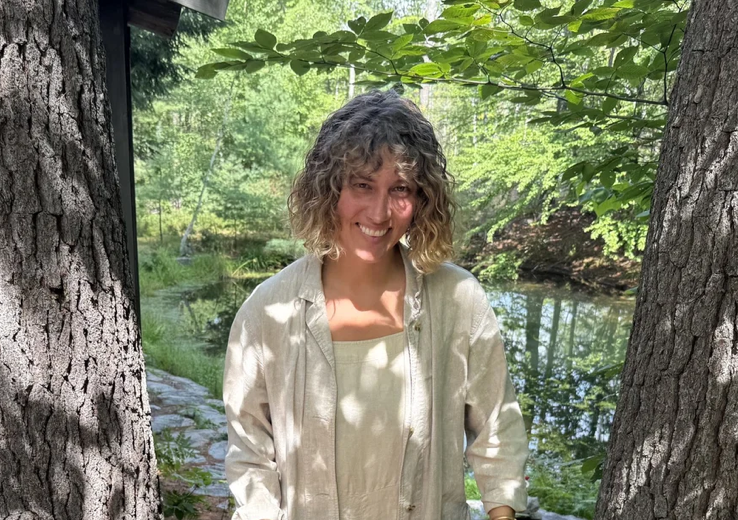
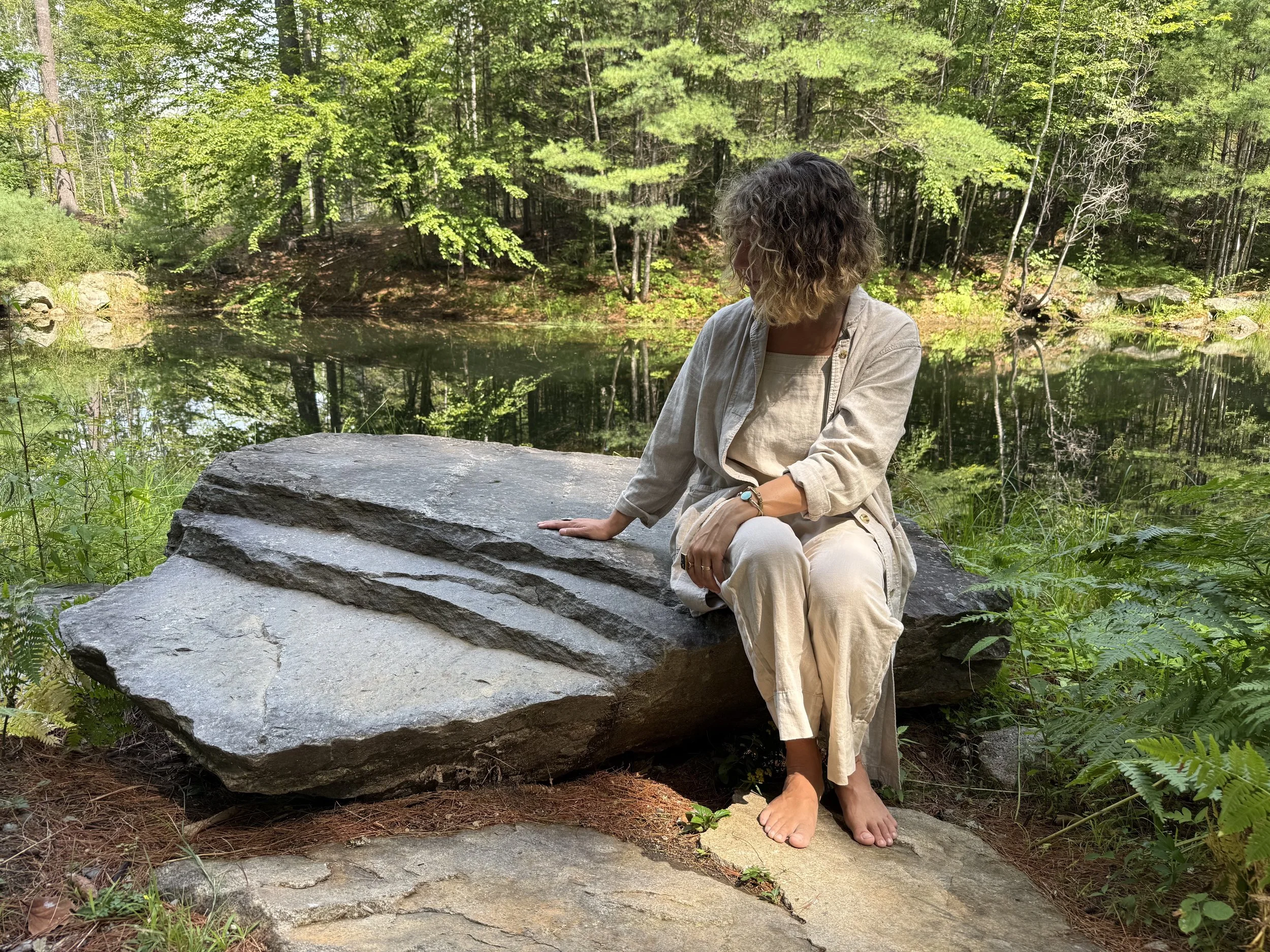
Hi, my name is Meg Meadows.
My approach to counseling is experiential, existential, and trauma-informed, grounded in the belief that healing happens through relationship—with ourselves, with one another, and with the living world. My work is informed by Buddhist psychology and mindfulness, Internal Family Systems, person-centered and existential traditions, somatic practices, and an understanding of attachment and family systems. I hold a deep respect for the ways our families, relationships, cultures, communities, and lived experiences shape who we are and how we understand our place in the world.
I see counseling as a collaboration built through curiosity, trust, and compassion. Together, we explore not only the stories you carry, but what is happening in the present—in your body, your inner world, your relationships, and the space between us. Often, the places where we feel stuck were once ways of keeping ourselves safe; rather than trying to eliminate these patterns or parts of ourselves, we can approach them with curiosity, tending what still hurts while creating space for something new to emerge.
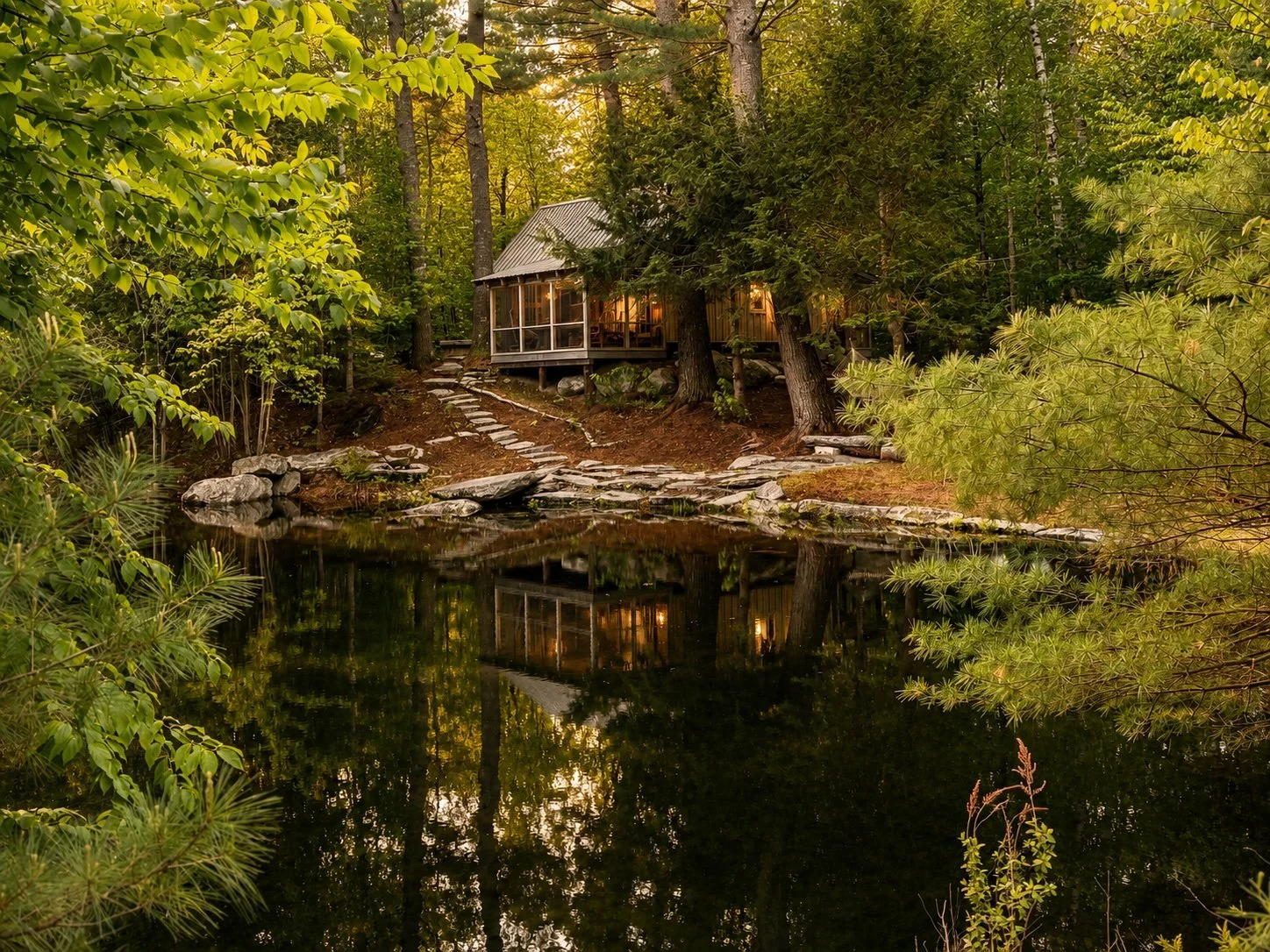
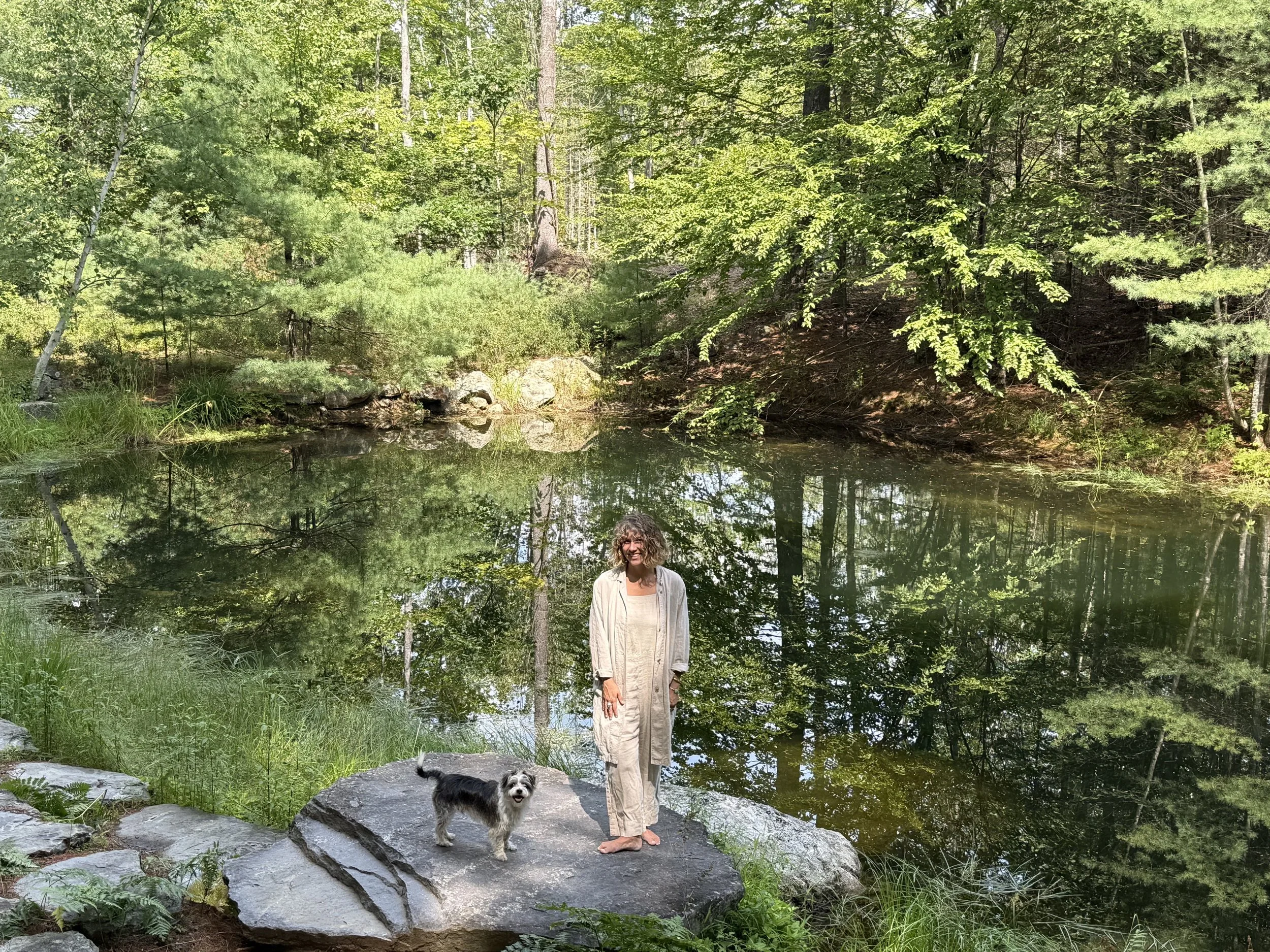
Meg and her dog, Wally, walk down the stone steps to the spring-fed, mineral-rich pond at The Cabin, where she sees individuals, couples, and groups.
What I Am Tending
A dharma teacher and psychotherapy mentor once shared with me that we often find ourselves accompanying others through terrain that is alive in our own lives. There can be a richness and vulnerability in this—not from a place of having arrived, but from being deeply engaged with the questions ourselves. Here’s some of what I’m tending right now.
Relationship & Intimacy
I’m curious about what it means to be deeply known by another—and why we can simultaneously long to be seen and fear what might happen if we truly are. I’m tending questions about intimacy, vulnerability, conflict, repair, and the space between us: how we protect ourselves, how we reach toward and retreat from one another, and what becomes possible when we risk staying present.
Grief & Impermanence
My own encounters with loss have deepened my relationship with grief and impermanence. I’m learning to understand grief less as something to resolve and more as something to make room for—to feel, express, witness, remember, and sometimes ritualize. I’m particularly drawn to the thresholds where something has ended and what comes next is not yet known, and to the ways nature, ritual, creativity, and community can help us inhabit these in-between places.
Addiction & the Hungry Ghost
I’m interested in approaching addiction and recovery with curiosity and compassion rather than shame. Drawing from Buddhist psychology and Internal Family Systems, I understand addictive patterns as often carrying something deeper: parts of us that are hurting, longing, protecting, or searching for a way to escape what feels unbearable. The Buddhist image of the hungry ghost, always reaching for something outside itself that can never quite satisfy the hunger within, offers another way of understanding this longing. Rather than fighting or exiling the parts of ourselves that reach for relief, I’m interested in turning toward them with compassion, becoming curious about what they have been trying to soothe or protect, and discovering what they may actually be longing for underneath.
Belonging & the Living World
I’m tending my own relationship with the living world and exploring what changes when we understand ourselves not as separate from nature, but as belonging within it. The seasons continually teach me about growth and decay, effort and rest, darkness and emergence, solitude and interdependence. I’m curious about how relationship with land, place, seasonality, and the more-than-human world might help us remember ways of being that modern life can make easy to forget.
Beneath the Words
I’m increasingly curious about what lives beneath language—the ways our bodies carry experience, memory, emotion, and the protective patterns shaped by what we’ve lived through. Trauma-informed work has deepened my interest in listening to the body alongside the stories we tell, and in experiential approaches that invite breath, movement, sensation, mindfulness, and expression into the room. I’m interested in what becomes possible when we move beyond talking about our experience and gently create space to encounter what is happening within us, here and now.
Coming Home
I’m increasingly less interested in healing as becoming a better or more perfected version of ourselves and more interested in what happens when we learn to meet what is already here. I’m tending the question of what it means to live with greater presence and authenticity—to loosen old stories, welcome back parts of ourselves we’ve hidden or left behind, and perhaps find our way home to ourselves, to one another, and to the living world.